Real numbers, tax credits, and what to expect from a Calvert County install
Geothermal is the most efficient heating and cooling technology you can put in a home, and it is also the one homeowners have the most questions about - starting with what it costs. This guide walks through real installed price ranges by loop type, what changed when the federal credit ended after 2025, whether geothermal makes sense in Maryland winters, and why working with a certified WaterFurnace dealer like Continental Services matters for the result you get.
A geothermal system, also called a ground-source heat pump, does not burn fuel to make heat and it does not fight the outdoor air to shed it. Instead, it moves heat between your home and the earth a few feet below the surface. Just under the frost line, the ground in Southern Maryland stays a steady 50-55F all year, no matter how hot or cold it gets outside. That stable temperature is the whole advantage: it is far warmer than winter air and far cooler than summer air, so the heat pump does much less work to keep your home comfortable.
The system has three parts: a buried loop of pipe, an indoor heat pump unit, and a circulating fluid that carries heat between the two. In winter, fluid in the loop absorbs warmth from the ground and the heat pump concentrates it and delivers it through your ductwork. In summer the process reverses - the system pulls heat out of your home and sends it down into the cooler earth. There is no noisy outdoor condenser sitting beside the house.
The ground loop is where installations differ, and the right choice depends on your lot, soil, and water access:
A closed loop is a sealed circuit of fluid that never contacts the ground or groundwater, while an open loop uses actual well water. During a site visit, Continental evaluates your property to recommend the loop type that fits your land and budget. You can see the full process on our geothermal installation page.
Because the system is just moving heat rather than burning fuel, it does the same job in both seasons with one piece of equipment - no separate furnace and air conditioner, and no combustion, flue, or gas line involved. That single indoor unit handles heating in winter and cooling in summer, and many WaterFurnace systems can also add a desuperheater that captures waste heat to help warm your household water. The comfort tends to feel steadier too: instead of the on-off blasts of a conventional furnace, geothermal delivers longer, gentler cycles that even out temperatures room to room and pull humidity out of the air during our muggy Chesapeake summers.
Geothermal costs more up front than a standard furnace-and-AC replacement, and the reason is the ground loop. Most of what you pay for a conventional system is the equipment; with geothermal, a significant share goes into the excavation or drilling that gets the loop into the earth. That is also why the loop type is the single biggest factor in the price - a horizontal loop in an open yard is far cheaper to install than a vertical loop that requires a drilling rig.
The table below shows typical national installed cost ranges by loop type. These are industry ranges to help you understand the landscape, not a Continental quote - your actual price depends on your home's size, soil and geology, the tonnage your home needs, and whether your existing ductwork can be reused. These are gross installed figures: the federal credit that once came off the total ended for installations completed after 2025, so the incentives section below covers what still applies.
| Loop Type | Best For | Typical Installed Cost* |
|---|---|---|
| Horizontal closed loop | Homes with adequate yard or acreage | $20,000-$30,000 |
| Vertical closed loop | Smaller lots; requires drilling | $25,000-$45,000 |
| Open loop (well water) | Properties with ample groundwater | $18,000-$30,000 |
| Pond/lake closed loop | Waterfront homes near a pond or lake | $18,000-$28,000 |
*Typical installed cost of a residential WaterFurnace system before any Maryland or utility incentive; the federal Residential Clean Energy Credit ended for installations completed after 2025. Final pricing depends on home size, soil/geology, tonnage, and existing ductwork. Call 410-535-0091 for a free in-home quote.
It helps to understand what moves the price within any single range. Home size and the heating and cooling load drive the tonnage of equipment you need, and a larger load means a longer ground loop, which is where a lot of the excavation cost lives. Soil and geology matter as well: easy-to-trench ground is cheaper to work than rocky or high-water-table sites, and vertical drilling depth varies with what lies beneath your property. Your existing ductwork is another factor - if it is in good shape and sized correctly, it can often be reused, but ducts that are undersized or leaky may need work to let a high-efficiency system perform as intended. Site access, the distance from the loop field to the mechanical room, and options like a desuperheater for water heating round out the variables. None of this is guesswork on our end; the load calculation and site evaluation Continental performs turn these factors into a firm number rather than a range.
When you compare geothermal to conventional HVAC, keep the whole timeline in view rather than just the sticker price. A geothermal system runs far more efficiently every month, and it lasts much longer, so the higher install cost is offset by lower operating bills over decades of use. For most homeowners who plan to stay in their home, that combination is what makes the numbers work. The best way to know your real cost is a free in-home assessment - contact Continental Services and we will size the system and quote it for your specific property.
For years the biggest single break on a geothermal install was the federal Residential Clean Energy Credit, worth 30% of the installed cost of a qualifying system. That credit has ended. Under the One Big Beautiful Bill Act, signed on July 4, 2025, the residential credit (Section 25D of the tax code) is not available for geothermal systems whose installation is completed after December 31, 2025. A system installed in 2026 does not earn a federal residential credit, and no percentage of the project comes back at tax time. We would rather say that plainly than let an old number shape your budget.
If your system was installed and placed in service in 2025, the credit still belongs to you. It reduces the federal income tax you owe rather than arriving as a rebate check, and if it was larger than your 2025 tax liability the unused portion generally carries forward to later tax years. Continental provides the installation documentation for your records; confirm the carry-forward on your own return with a tax professional, since every household's situation is different.
What remains is at the state and utility level, and it changes more often than federal law does. The Maryland Energy Administration runs residential energy programs that have supported efficient heating and cooling upgrades in past program years; whether geothermal qualifies, and on what terms, depends on the program year. Calvert County homes are served mainly by SMECO, the local electric cooperative, and parts of our service area fall under BGE; both utilities have offered efficiency rebates for qualifying equipment through the EmPOWER Maryland programs in past cycles. Because these programs open, close and change their rules, we do not print dollar amounts here. Before you sign a contract, we check the current program pages with you and confirm what your specific equipment and address qualify for on that date.
Financing fills the gap the federal credit used to cover for many households. Continental offers financing through Synchrony and EnerBank by Regions, and EnerBank's programs are built for energy-efficient home improvements like geothermal. Details are on our financing page; the practical point is that a monthly payment can be weighed directly against the monthly energy savings a geothermal system produces.
That is where the case for geothermal in 2026 actually rests. Because the system moves heat from stable ground temperatures instead of fighting outdoor air, it cuts heating, cooling and often water-heating energy use every month for the life of the equipment, and WaterFurnace units routinely run for 20-plus years while the buried loop lasts far longer. The federal credit lowered what you paid to get in; the efficiency lowers what you pay every month after, and that part has not changed. A free in-home assessment turns those general statements into real numbers for your house: contact Continental Services to schedule one.
Yes - and this is where geothermal separates itself from ordinary air-source heat pumps. A standard air-source heat pump pulls heat from the outdoor air, and on the coldest Maryland days there is simply less heat in that air to capture, so the unit strains and often falls back on electric backup strips that drive up the bill. A geothermal system does not have that problem, because it never touches the frigid winter air.
Instead, a geothermal system draws its heat from the ground, which holds a stable 50-55F just below the surface all winter long. That underground reservoir does not care whether it is 40 degrees or 5 degrees at the surface - the loop is exchanging heat with earth that stays in the same comfortable range every day of the year. So the system delivers steady, efficient heating right through the coldest stretches, without the drop-off in output that air-source equipment experiences when temperatures plunge.
The same stable ground temperature that helps in winter also works in your favor during summer. When the system runs in cooling mode, it rejects your home's heat into that cool earth rather than dumping it into already-hot outdoor air the way an air conditioner does, so cooling stays efficient even during the worst July and August stretches. And because geothermal runs in longer, steadier cycles, it does a thorough job of wringing humidity out of the air - a real benefit in our Chesapeake climate, where damp indoor air is often the difference between a house that feels comfortable and one that feels sticky at the same thermostat setting.
Geothermal has been installed successfully in climates far harsher than Southern Maryland's, from the upper Midwest to Canada. For our region, with cold snaps but generally moderate winters, a properly sized WaterFurnace system handles the heating load reliably. The key phrase is "properly sized," which is why the load calculation Continental performs during your assessment matters so much. You can read more about ongoing care on our geothermal service page.
Geothermal is not a plug-and-play appliance. The performance you actually get depends heavily on design decisions made before anyone breaks ground: the load calculation, the equipment sizing, the loop length and layout, and the commissioning that verifies the finished system runs the way it was engineered to. Get those right and a geothermal system delivers decades of efficient, quiet comfort. Get them wrong and the same equipment underperforms, no matter how good the hardware is. This is why the installer matters as much as the brand.
Continental Services is Southern Maryland's certified WaterFurnace dealer, and that certification represents factory training in the specific engineering behind ground-source heat pumps - training that most general HVAC contractors have not completed. WaterFurnace is one of the most established names in geothermal, and its dealer program holds installers to standards for system design, loop sizing, and installation practice. When a certified dealer handles the project, the sizing follows manufacturer specifications, the loop is matched to your soil and load, and the system is commissioned properly.
It also matters after the install. A certified dealer has direct access to WaterFurnace technical support, service documentation, and genuine replacement parts, which keeps long-term service straightforward. Continental has been family-owned in Calvert County since 1985, and geothermal is a genuine specialty for us rather than an occasional job - no competitor in our immediate area offers WaterFurnace geothermal. That combination of local roots and factory certification is what you are buying when you choose a certified dealer: accountability from the same team, year after year, for a system meant to last decades.
The clearest way to weigh geothermal against a conventional air-source system is to look at how they differ over the life you will own them, not just on installation day. Geothermal costs more to put in, but it is dramatically more efficient to run, it lasts substantially longer, and it does its work without a condenser unit humming outside your windows. A traditional air-source system costs less up front and is quicker to install, but you pay more to operate it every month and you replace it sooner.
| Factor | Geothermal (Ground-Source) | Traditional (Air-Source) |
|---|---|---|
| Efficiency | Up to 4 times more efficient; draws from stable 50-55F ground | Lower; efficiency drops as outdoor air gets colder |
| Operating cost | Much lower monthly energy use; 50-70% heating and cooling savings | Higher monthly energy bills, especially in deep cold |
| Lifespan | Indoor unit 20-plus years; ground loop lasts decades longer | Typically shorter equipment life before replacement |
| Outdoor unit noise | None; no outdoor condenser | Outdoor condenser produces noise during operation |
Efficiency is the headline: a geothermal heat pump can run up to four times more efficient than conventional equipment, because moving heat from the ground takes far less energy than making it or wrestling it out of the air. That efficiency is what produces the 50-70% reduction in heating and cooling costs geothermal homeowners commonly see, and those savings repeat every month for the life of the system. Add the 20-plus-year equipment life, and geothermal's higher install cost is spread across a very long, very efficient run. If you plan to stay in your home, that math usually favors geothermal; if you expect to move soon, a traditional system's lower up-front cost may fit better. During a free in-home consultation, Continental lays both options out honestly so you can decide with real numbers.
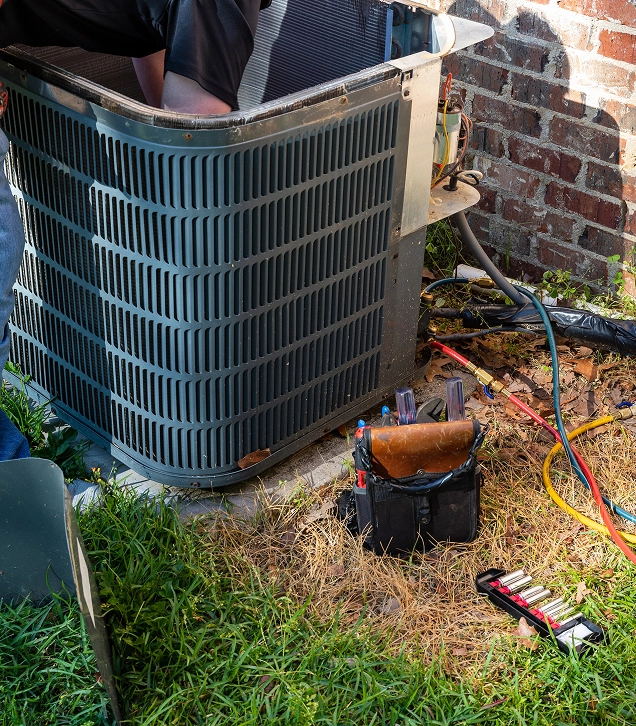
Preventive maintenance is the best investment you can make in your HVAC equipment. Our maintenance programs keep your heating and cooling systems running efficiently, prevent unexpected breakdowns, extend equipment lifespan, and ensure your manufacturer's warranty remains valid - all while saving you money on energy bills.
Seasonal tune-ups scheduled at optimal times - cooling system service before summer, heating system service before winter
Thorough inspections of all critical components to catch small issues before they become expensive problems
Cleaning and adjustments that restore efficiency and performance
Priority service when you need repairs, with members moving to the front of the line
Discounts on repairs to reduce your costs if something does need fixing
Peace of mind knowing your systems are being professionally maintained
Regular maintenance typically reduces energy consumption by 15-20%, prevents 95% of equipment breakdowns, and extends system life by years. The small investment in preventive care pays for itself many times over through lower utility bills, fewer repairs, and longer equipment life.
Join Today Learn More
© Red Barn Media Group 2026