Why Is My AC Not Cooling? 7 Reasons & DIY Troubleshooting

What to check before you call, and when it's time for a technician

Your air conditioner is running but the house is not getting any cooler - one of the most frustrating problems on a humid Southern Maryland afternoon. The good news is that several of the most common causes are simple, and you can check them yourself in a few minutes. This guide walks through the seven reasons an AC stops cooling, gives you a step-by-step DIY checklist, and explains exactly when the problem needs an EPA-certified technician. Continental Services has kept Calvert County homes cool since 1985. Call 410-535-0091 for same-day service during business hours.

Ruud Pro Partner
Google My Business

star star star star star_half

Read Reviews arrow_forward
Family-Owned & Operated

7 Reasons Your AC Isn't Cooling

When cool air stops reaching your rooms, the cause almost always falls into one of seven categories. Some you can fix yourself in minutes; others need a professional. Here they are in the order our technicians typically check them.

  1. Thermostat settings. It sounds obvious, but a thermostat bumped to "heat" or "fan," set too high, or with dead batteries is a genuinely common cause of "no cooling." Confirm it is set to COOL and several degrees below the current room temperature, and that the fan is on AUTO rather than ON - leaving it ON blows uncooled air between cycles and can feel like the system stopped cooling.
  2. Dirty air filter. A clogged filter is the single most frequent reason an AC blows weak or warm air. As the filter loads up with dust, it chokes off airflow across the coil, which drops cooling output and can freeze the coil solid. Filters are cheap and take two minutes to swap, which is why this is step one in the checklist below.
  3. Frozen evaporator coil. Restricted airflow or low refrigerant can cause the indoor evaporator coil to ice over. Once it is coated in frost, air can no longer pass across it and cooling stops entirely. If you see ice on the indoor unit or the refrigerant line, the system needs to be shut off to thaw before it can run again - and the underlying cause has to be found.
  4. Low refrigerant from a leak. Refrigerant is not consumed like fuel, so if the charge is low, the system has a leak. Low refrigerant leaves the system unable to absorb heat, so it runs constantly while the house stays warm, and it often freezes the coil. Refrigerant work requires an EPA-certified technician - it is not a DIY fix.
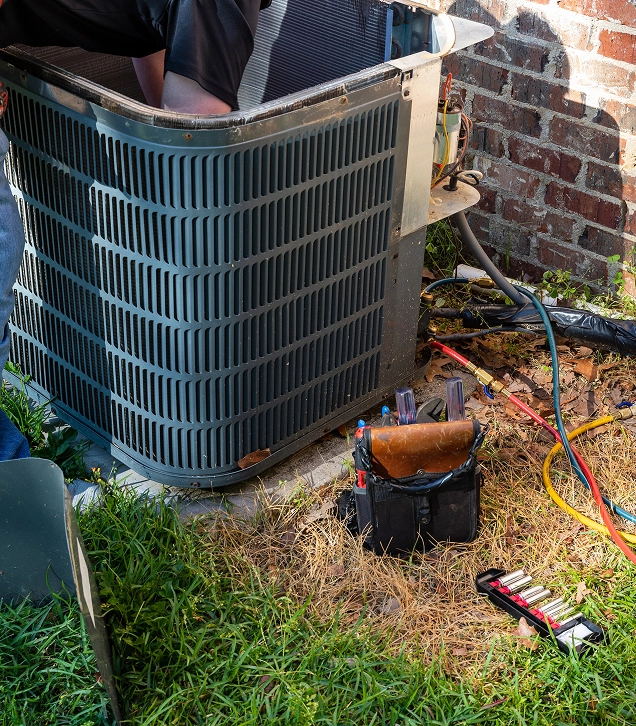
  5. Dirty outdoor condenser. The outdoor unit sheds your home's heat into the air, and it cannot do that job buried in grass clippings, leaves, or cottonwood fluff. When the condenser coil is caked with debris or crowded by shrubs, the system loses its ability to reject heat and cooling suffers. Keeping the unit clear is something you can handle yourself.
  6. Failed capacitor. The capacitor is the component that gives the compressor and fan motors the jolt they need to start and keep running. A failed or weak capacitor is a very common summer breakdown - the outdoor fan may not spin, or you may hear a hum without a start. This is an electrical repair for a technician.
  7. Tripped breaker or blown fuse. If the outdoor unit is completely dead while the indoor blower runs, a tripped breaker or blown fuse may have cut power to the condenser. You can safely reset a breaker once; if it trips again immediately, stop and call for service, because a repeat trip signals an electrical fault that needs diagnosis.

DIY Troubleshooting Checklist

Before you pick up the phone, run through these steps in order. They cover the safe, homeowner-friendly checks that resolve a large share of "AC not cooling" calls - and if they do not fix it, you will have ruled out the simple causes so the repair goes faster.

  1. Check the thermostat - set to COOL and at least 3-5 degrees below room temperature.
  2. Replace the air filter - a clogged filter is the number-one cause of weak or no cooling.
  3. Reset the breaker - if the AC circuit tripped, flip it fully off then on.
  4. Clear the outdoor condenser - remove leaves/grass; keep 2 ft of clearance.
  5. Open and unblock all vents and registers so air can circulate.
  6. Look for ice on the indoor coil or refrigerant line - if iced, shut the system off and let it thaw.
  7. Still not cooling? Call Continental at 410-535-0091 - likely low refrigerant, a failed capacitor, or compressor.

Work through the list in order, because the steps build on each other - a fresh filter, for instance, will not help if the coil is already frozen solid, and clearing the outdoor unit does nothing if the breaker to it has tripped. Give the system 15 to 20 minutes to respond after each change before deciding it did not work, since an AC needs a little run time to bring the house temperature back down on a hot day. If you make it to the last step, you have safely ruled out every cause a homeowner can address, and the remaining possibilities are the ones that call for tools, gauges, and certification. Note what you observed - warm air, ice on the line, a humming outdoor unit that will not start - and share it when you call, because those details help our technician arrive with the right parts and cut your diagnosis time.

When to Call a Pro

Some AC problems are firmly off-limits for DIY, both because they require specialized tools and certification and because getting them wrong can turn a moderate repair into a compressor replacement. Call a technician when the basic checklist above does not restore cooling, or right away if any of these are true.

  • You suspect low refrigerant. A system that runs nonstop without cooling, or that keeps freezing after you have replaced the filter, points to a refrigerant leak. Handling refrigerant legally requires EPA certification, and simply "topping it off" without finding the leak wastes money and harms the system.
  • The coil keeps freezing. If ice returns after you thaw the system and change the filter, there is an airflow or refrigerant fault underneath that needs to be diagnosed before the compressor is damaged.
  • The breaker trips repeatedly. One reset is fine; a breaker that trips again immediately is protecting you from an electrical fault. Leave it off and call.
  • The outdoor fan won't spin or you hear humming. That pattern often points to a failed capacitor or contactor - a common, fixable repair, but an electrical one for a technician.
  • Warm air with no obvious cause. If the filter is clean, the thermostat is right, and the unit has power but the air is still warm, it is time for a professional diagnosis.

Continental's EPA-certified technicians diagnose the exact fault and explain your options before any work begins - no guesswork and no upselling. If your home is not cooling and the simple steps did not help, schedule same-day AC repair during business hours at 410-535-0091. Keeping up with a yearly tune-up prevents most of these breakdowns in the first place - see our AC maintenance page for what a seasonal service covers.
Comprehensive HVAC Maintenance Programs in Southern Maryland

Comprehensive Maintenance Programs

Preventive maintenance is the best investment you can make in your HVAC equipment. Our maintenance programs keep your heating and cooling systems running efficiently, prevent unexpected breakdowns, extend equipment lifespan, and ensure your manufacturer's warranty remains valid - all while saving you money on energy bills.

circle event_available

Seasonal tune-ups scheduled at optimal times - cooling system service before summer, heating system service before winter

circle search

Thorough inspections of all critical components to catch small issues before they become expensive problems

circle energy_savings_leaf

Cleaning and adjustments that restore efficiency and performance

circle delivery_truck_speed

Priority service when you need repairs, with members moving to the front of the line

circle Loyalty

Discounts on repairs to reduce your costs if something does need fixing

circle verified_user

Peace of mind  knowing your systems are being professionally maintained

Regular maintenance typically reduces energy consumption by 15-20%, prevents 95% of equipment breakdowns, and extends system life by years. The small investment in preventive care pays for itself many times over through lower utility bills, fewer repairs, and longer equipment life.

Join Today   Learn More

Frequently Asked Questions

The most common causes are a dirty air filter, low refrigerant from a leak, a frozen evaporator coil, a failing capacitor or compressor, or a tripped breaker. Continental's technicians diagnose the exact issue and explain your options before any repair. If your home AC isn't cooling, call 410-535-0091.

If your system runs but blows warm or weak air, suspect a clogged filter restricting airflow, low refrigerant, a dirty outdoor condenser coil, or frozen indoor coils. Try replacing the filter first; if that doesn't help, switch the unit off to prevent damage and call Continental at 410-535-0091.

Ice on your AC usually means restricted airflow - often a dirty filter or blocked return - or low refrigerant. Continental recommends turning the system off to let it thaw, then replacing the filter. If it refreezes, you likely have a refrigerant or coil issue our technicians should inspect before the compressor is damaged.

A well-maintained central air conditioner or heat pump typically lasts 12-15 years in Southern Maryland's humid, coastal climate. Annual tune-ups, clean filters, and prompt repairs extend that life. Once a system passes 12 years and needs major repairs, Continental honestly weighs repair versus a more efficient replacement with you.

Homeowners can safely replace filters, clear debris from the outdoor unit, check the thermostat, and reset a tripped breaker. Refrigerant, electrical, and compressor work require an EPA-certified technician and proper tools. When basic steps don't restore cooling, call Continental at 410-535-0091 rather than risk costly damage.

© Red Barn Media Group 2026